This article is part of our Ask the CMO series, where Cook Medical’s chief medical officer, Dr. John Kaufman, answers questions. Learn more about Dr. Kaufman in his Meet Our Leaders bio.
Q: What are some disease states and interventional therapies that would greatly benefit from iMRI technology?
Dr. Kaufman: Interventional MRI will have the biggest impact in cancer treatment, musculoskeletal disorders, pediatric care, and cardiac interventions.
Cancer is probably one of the biggest areas for contribution for iMRI. Currently MRI is used extensively in the diagnosis, staging and follow-up of patients with cancer, for example liver, prostate, and soft tissue tumors. There are some interventions that are performed on cancer patients under MRI, but because of the technical limitations, it’s really not been pursued on a large scale. Our collaboration with Siemens Healthineers and our development of iMRI-compatible devices could unlock a huge range of cancer therapies for patients that have been previously unavailable.
MRI is a particularly great imaging modality for musculoskeletal diseases because of the ability to differentiate the many soft tissues such as muscles, tendons, cartilage, nerves, and the linings of joints. Biopsies, ablations (thermal destruction of tissue), nerve blocks, and perhaps even spine interventions may be ideal for iMRI.
In keeping with our commitment to find solutions for all patients in need, the potential pediatric applications are very exciting. Interventional MRI could be very impactful for kids who have chronic diseases that that currently require multiple repeat procedures with ionizing radiation. If you can do these procedures in MRI, it may be beneficial in the long term. While we always want to keep x-ray exposure as low as possible, we are less concerned about one or two exposures in adults. But in some children who are getting imaging and image-guided procedures on almost a monthly basis, this can be a big deal.
Additionally, the cardiac world is very interested in iMRI. Cook is not currently deeply involved in the cardiac space, but this may lead us in a new direction. So, these are just a few of the early areas where iMRI could significantly change current procedures. Once we have iMRI tools in everyone’s hands, it will be really exciting to see all the different places it gets applied.
Q: What are some challenges with iMRI?
Dr. Kaufman: Interventional MRI has some technical, procedural, and some logistical challenges.
Technical challenges
The major technical issue is that it is a completely different environment than most interventionalists are used to working in. There is a very strong magnetic field, and everything needs to be compatible with this. You must have dedicated tools that are not attracted to the magnetic field, don’t create a lot of artifact, but that you can still see with MRI. This creates a lot of challenges in terms of creating devices, including some of the standard accessories that you need when you are doing an intervention like monitors and ultrasound machines. All tools need to be specially designed to work in this environment.
Now, that being said, everyone should understand that there is already a a lot of patient support equipment that is designed for more powerful MRI machines than the 0.55T interventional MRI. It is very common, particularly for children, to have MRIs under sedation or general anesthesia. There are already ultrasound machines that work in this environment. It may sound like a daunting challenge to create iMRI-compatible medical devices, but it is really not as great as you might think. Right now, it’s primarily the procedural tools and devices that have led to the limited adoption of iMRI.
Procedural challenges
It’s also difficult procedure-wise to figure out the configuration of working in an MRI. It’s a small space. It has typically been a very confined environment. However, the iMRI machines have a larger bore, and we are working on those tools that will allow them to be easily manipulated in that environment.
Logistical challenges
The logistical challenges are also daunting. There are different safety requirements around MRIs. Patients have to be screened in a different way than they are for other procedures.
Additionally, getting physicians the necessary time on diagnostic magnets for procedures is challenging in most places unless they have a dedicated MRI for intervention. However, the training needed for running the magnets for both intervention and diagnostic components are all things that Cook has planned for and can provide.
How Cook Medical is solving these iMRI challenges
We’re rethinking the way the whole iMRI suite works and solving challenges with iMRI-conditional devices, training modules, installation support, redesigned MRI machines, and more. Pete Polverini, the vice president of Cook’s iMRI division, has viewed these challenges and opportunities in a holistic way. He’s thinking beyond the idea of finding a device that works in a magnet–he’s thinking about this entire environment and what is needed to make this successful. We’re excited to continue working with Siemens Healthineers on creating that environment that overcomes the logistical, procedural, and technical challenges.
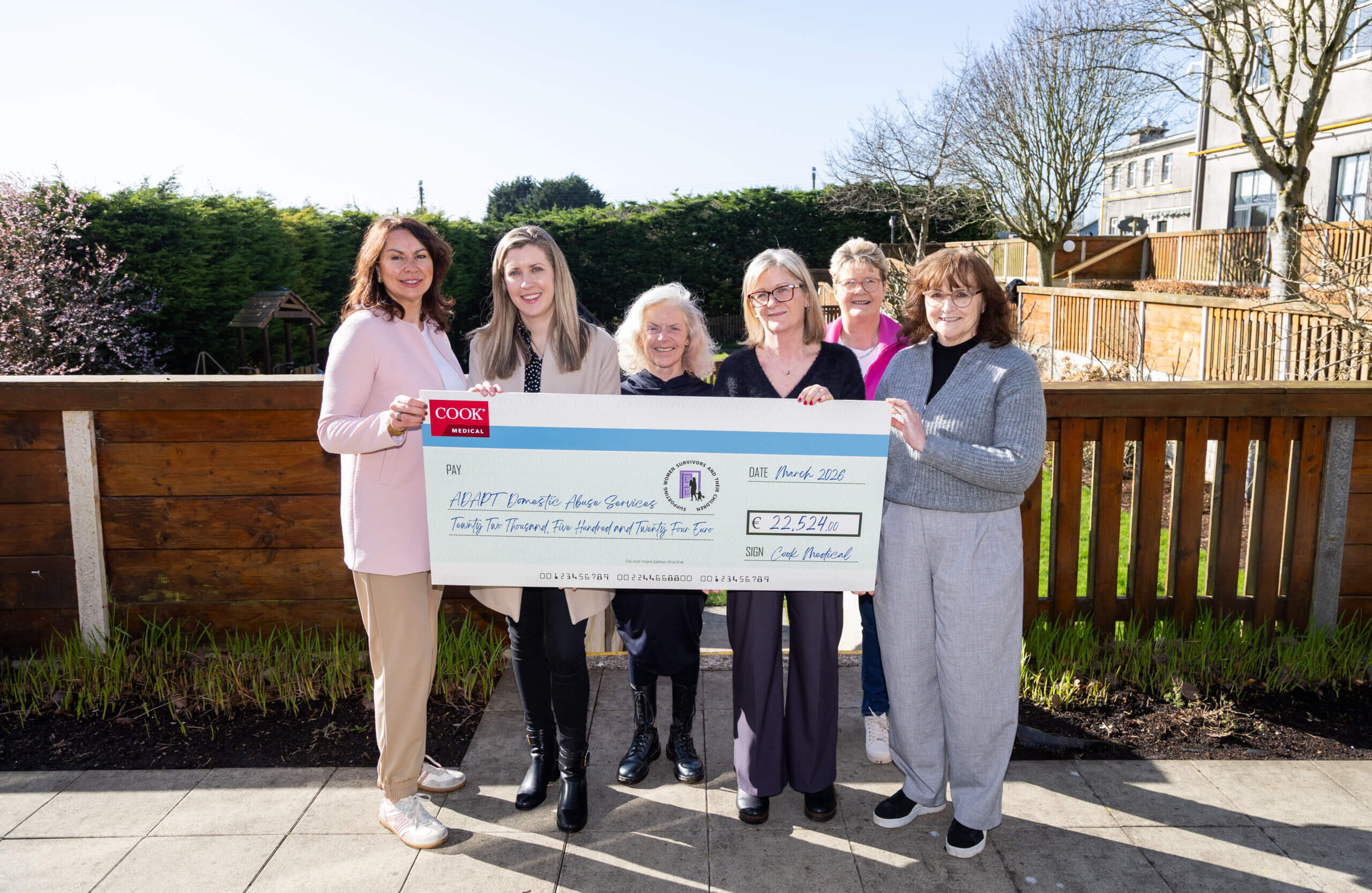
Cook Medical has made a significant donation of €22,524 to ADAPT Domestic Abuse Services, marking the successful conclusion of a two-year charity partnership that has made a meaningful difference in the local community.
 Throughout this partnership, Cook Medical has not only supported ADAPT’s vital work in providing refuge to victims of domestic abuse but has also offered valuable volunteer opportunities for its employees. These initiatives have fostered a deeper connection with the community, while also providing employees with meaningful ways to give back.
In addition, Cook Medical hosted learning sessions for both local and global employees, raising awareness about domestic abuse and promoting a culture of compassion and understanding across the organisation.
Bill Doherty, executive vice president and managing director of Cook Medical Europe, said, “We are incredibly proud of what we have achieved together over the past two years. This partnership has been truly fulfilling for all of us at Cook Medical. We are committed to supporting our communities and making a meaningful impact through our partnerships. It’s been a privilege to work alongside an organisation like ADAPT that makes such a profound difference in people’s lives.”
Denise Dunne, director of services at ADAPT Domestic Abuse Services, expressed her gratitude, saying, “This generous donation will have a significant impact on our ability to deliver essential services to those affected by domestic abuse. We are grateful for Cook Medical’s ongoing commitment and partnership, which helps us to create safer, stronger communities.”
Supporting communities through partnerships like this is part of Cook’s vision and strategic plan. Their activities may vary across the globe, but together they are committed to making an impact everywhere they operate in their unique Cook way.
Key takeaways:
- What: Cook Medical and Indiana University launch iMRI Center of Excellence to advance radiation-free, MRI-guided medical interventions.
- How: The work spans two complementary initiatives: IU School of Medicine/MIRI medical imaging research infrastructure and the FAMES–Cook engineering initiative for MR-visible devices and to translate iMRI into clinical practice.
- Impact: Creates replicable model for hospitals to implement safer MRI-guided interventions while eliminating radiation exposure for patients and medical staff
Bloomington, Ind. — Cook Medical has selected Indiana University as one of the first Interventional MRI (iMRI) Centers of Excellence. The collaboration is designed to accelerate the advancement, validation, and clinical integration of innovative MRI‑guided technologies and make certain medical procedures safer, more precise, and less invasive for patients.
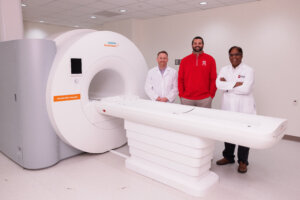
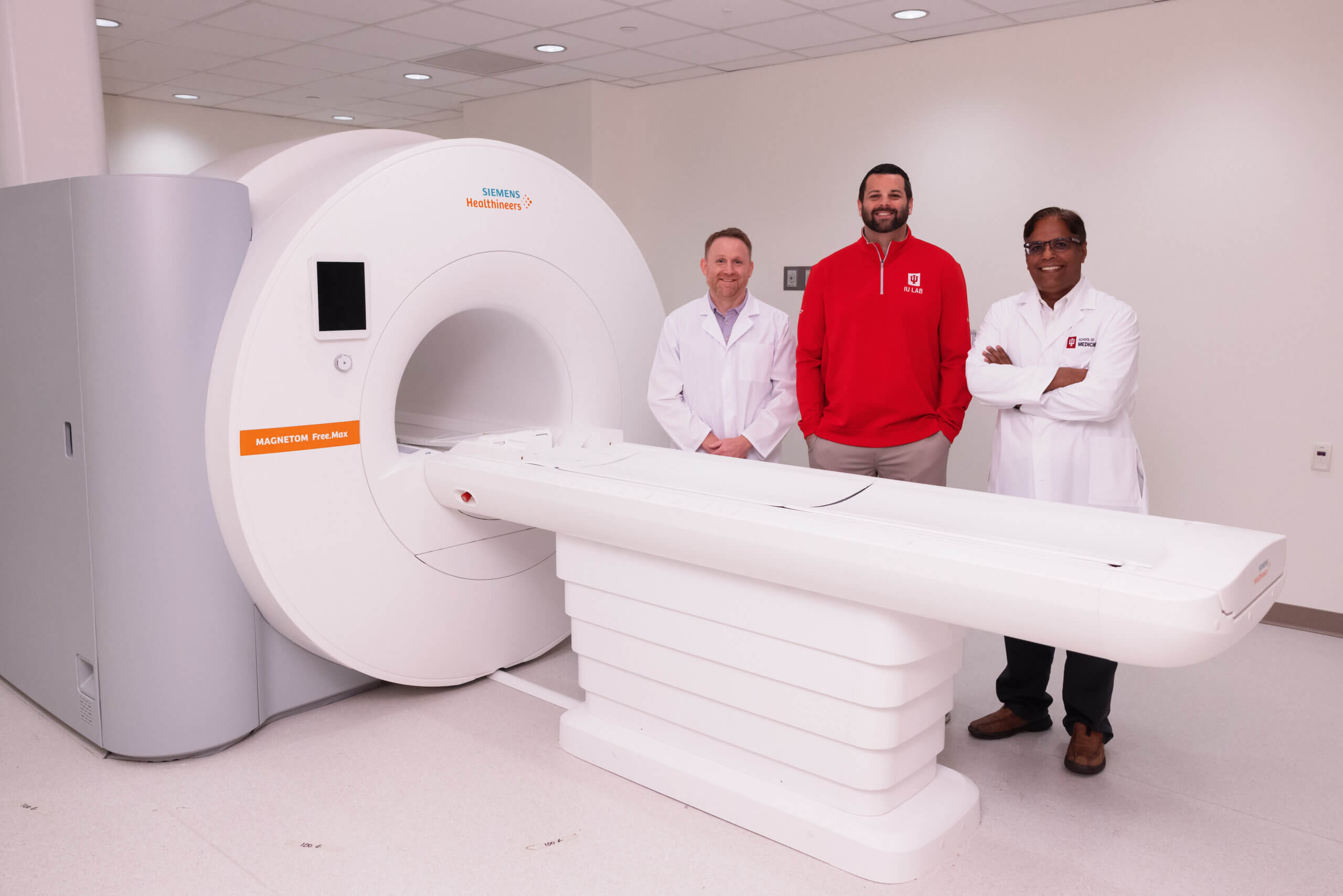
From left to right, Sean Chambers, Director of Research and Development at Cook Medical; David Rosenberg, President and CEO of IU LAB; and Rohan Dharmakumar, Executive Director of the Medical Imaging Research Institute pose for a photo in the iMRI suite. The photo was taken at IU Indianapolis on Wednesday, March 4, 2026. (Photo by Liz Kaye/Indiana University)
The Center of Excellence builds on a five‑year agreement announced in 2025 between Cook Medical and the Indiana University Launch Accelerator for Biosciences (IU LAB) to translate IU research into real‑world health care applications. The collaboration underscores Cook’s broader focus on innovation.
What is the Interventional MRI (iMRI) Center of Excellence?
The iMRI Center of Excellence is a coordinated model that combines device engineering, imaging science, and clinical research infrastructure to speed the development and adoption of MRI‑guided technologies in hospitals and health systems. This practice allows doctors to treat patients without radiation risk while seeing soft tissues in greater detail, enabling more precise and potentially safer interventions.
A blueprint for radiation-free intervention
Indiana University will serve as the model site demonstrating the pathway for translating iMRI into future clinical practice. The university will create a working, real-world environment that hospitals and health systems can tour, learn from, and replicate as MRI-guided care grows in Indiana and beyond. The site will also support physician training and knowledge‑sharing as adoption expands, while helping prepare a new generation of iMRI technologists and clinical staff needed to support MRI-guided procedures nationwide.
“This Center of Excellence allows Indiana University to capitalize on our research strengths and convert them into real change for patients,” said David Rosenberg, president and CEO of IU LAB. “By bringing engineers, imaging experts, and the clinical excellence of the IU School of Medicine together in one place, we can move promising MRI-guided care ideas out of the lab and into hospitals more quickly – all in service of our goal to help patients benefit from safer, radiation-free procedures.”
“Indiana University School of Medicine is committed to making innovations that improve patient care,” said Jay L. Hess, MD, PhD, MHSA, dean of the Indiana University School of Medicine and executive vice president for university clinical affairs at Indiana University. “This partnership with Cook Medical combines world-class imaging, engineering expertise and clinical leadership. Through creating the iMRI Center of Excellence, we can accelerate the development of safer, more effective treatments for patients in Indiana and around the world.”
“We’re excited to name Indiana University as one of the first Centers of Excellence,” said Pete Polverini, vice president, interventional MRI division, Cook Medical. “Our mission for iMRI is bold: to enable safer, more precise, and more effective procedures using interventional MRI, and this collaboration reflects Cook’s accelerated approach to innovation and moving more quickly to bring our new ideas to patients.
Two complementary initiatives: engineering innovation + clinical integration
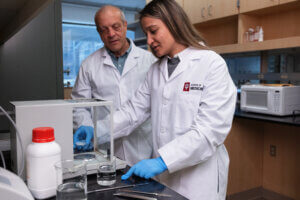
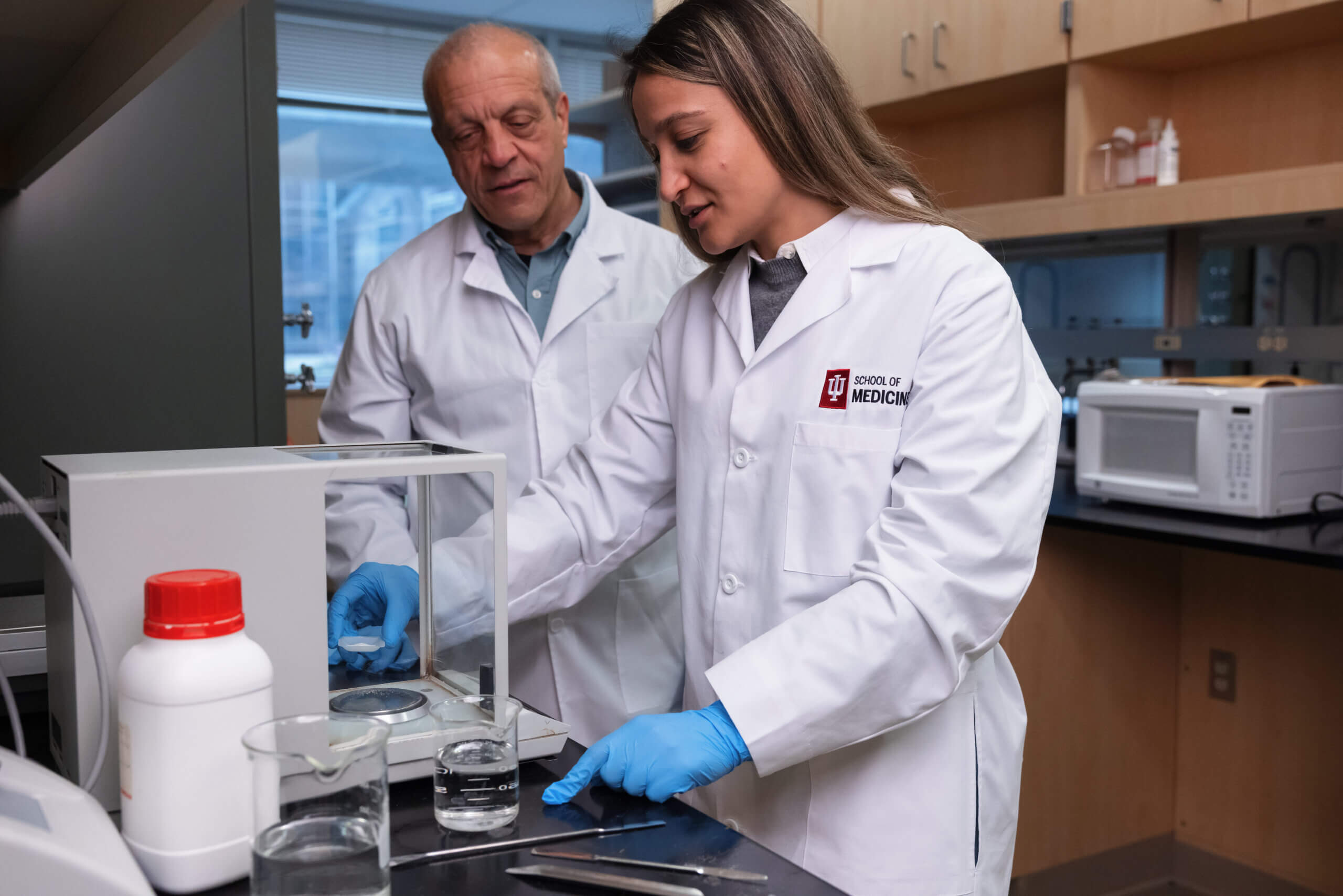
Ghazal Yoosefian, a Research Assistant at the Medical Imaging Research Institute of the IU School of Medicine, is collaborating with Yanni Pandelidis from Cook Medical in the lab. This photo was taken at IU Indianapolis on Wednesday, March 4, 2026. (Photo by Liz Kaye/Indiana University)
Indiana University and Cook Medical have launched two complementary initiatives spanning the full continuum of iMRI innovation, from advanced engineering of MRI‑visible devices to radiology and imaging research within the IU School of Medicine.
- The IU School of Medicine’s Medical Imaging Research Institute (MIRI) will serve as the clinical and imaging research hub for the Center of Excellence, providing the imaging research and clinical research infrastructure, model iMRI suite, and dedicated personnel needed to validate, integrate, and translate MRI-guided technologies within real‑world procedural processes.
- The FAMES–Cook initiative drives breakthrough engineering innovation by combining materials science, computational modeling, and advanced fiber manufacturing to develop MR‑visible and unique sensing devices designed specifically for interventional MRI environments.
Together, these initiatives connect engineers, imaging experts and physicians into one interdisciplinary system which accelerates translational research while positioning both organizations at the forefront of precision medicine.
About Cook Medical
At Cook Medical, we are passionate about making unique, quality medical devices and connecting with people to improve lives. Founded on inventing, manufacturing, and delivering medical devices, we provide healthcare professionals with the tools they need to help their patients return to living.
Our commitment to innovation involves bringing new products to market and keeping existing products relevant to a changing healthcare landscape. We believe in using our business to help people and communities thrive by creating inclusive, supportive, and healthy environments.
We are proud of our history of innovative firsts and the impact we have on patients and communities. With headquarters in Bloomington, Indiana, and manufacturing facilities and offices in various global locations, we challenge ourselves to maintain a global perspective while focusing on local impact.
Follow Cook Medical at CookMedical.com and on LinkedIn.
About Indiana University
Indiana University is one of the nation’s leading public research universities, with nearly 90,000 students across seven campuses, two regional academic centers and nine School of Medicine campuses. Since 1820, Indiana University has helped students create brighter futures, while also driving innovation, from breakthroughs in DNA technology to cancer research to trailblazing cultural programs and resources. IU is home to world-class academics with the country’s largest medical school, the world’s first school of philanthropy, the top-ranked Kelley School of Business and O’Neill School of Public and Environmental Affairs, and the Luddy School of Informatics, Computing and Engineering, the nation’s first school of informatics. The university’s campuses are united by IU 2030, an aspirational vision for a bold and ambitious future focused on student success and opportunity, transformative research and creativity, and service to the state of Indiana and beyond. Learn more at iu.edu.
FAQs
Q: What did Cook Medical and Indiana University announce?
A: They established Cook Medical’s first Interventional MRI (iMRI) Center of Excellence at Indiana University to accelerate the development and clinical adoption of MRI‑guided technologies.
Q: What is the purpose of the iMRI Center of Excellence?
A: To build a vertically integrated pipeline spanning engineering, imaging science, and clinical medicine—supporting validation, clinical integration, and translation of MRI‑guided technologies into real workflows.
Q: What are the two initiatives included?
A: The FAMES–Cook engineering initiative and the Interventional MRI Center of Excellence clinical research infrastructure initiative at the IU School of MedicineMedical Imaging Research Institute.
Cook Medical has won the Workplace Inclusion Award at the inaugural Employability Limerick Inclusion Awards. The awards, which took place at the Clayton Hotel in Limerick City, recognised and celebrated excellence in inclusive employment in the region.
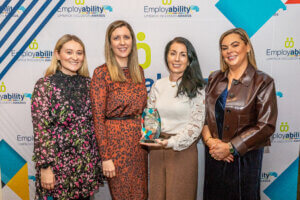
Cook Medical was honoured with the Workplace Inclusion Award in recognition of its commitment to fostering an inclusive workplace where employees with disabilities feel supported, valued and empowered to thrive every day.
Through initiatives such as Campus2Career, Employer Based Training, work experience programmes and Business Resource Groups, Cook ensures all employees have the support they need to succeed.
“We’re absolutely delighted to receive the Workplace Inclusion Award,” said Carla DiBenedetto, director of HR EMEA at Cook Medical. “We are grounded in our purpose; to empower our employees, as well as our communities, to reach their full potential. We’re committed to creating an environment where everyone feels valued, supported and included.”
Cook Medical puts its people at the heart of everything they do. They provide resources and support to help their employees achieve their personal and professional goals while actively working to remove any barriers that stand in their way.
This article is part of our Ask the CMO series, where Cook Medical’s chief medical officer, Dr. John Kaufman, answers questions. Learn more about Dr. Kaufman in his Meet Our Leaders bio.
Q: You have worked with many other medical device companies and many people in the industry, such as sales reps, trainers, product managers, and regulatory scientists. From a physician’s perspective, how did Cook differentiate itself?
Dr. Kaufman: The reason that I was so excited to join Cook is that for my entire career I always felt that anyone that I worked with from Cook is more of a partner with aligned interests toward doing the best thing for the patient than a transactional relationship. I’ve never felt with Cook that there was a pressure to use something that somebody needed to fill a quota for or convince me to switch to something. It was never that way. It is always with Cook that I felt aligned, to the extent that I could trust anyone from Cook to say, “We don’t have the thing you are looking for, but this other company does.” When I first then began investigating or meeting people as potentially becoming part of Cook that culture was very clear.
What is different about Cook is that, although that culture may be present at other companies, it is such a strong presence throughout all of Cook. There is a shared alignment of goals between those of us who are taking care of people and trying to do the best thing for the person in front of us regardless of other factors. Overall, that is how Cook operates.
Obviously, we are a company, we have to somehow make enough money to stay afloat and make enough money to take care of the people who work for us as well. So, decisions can’t always be purely altruistic. We do have to make some of those decisions, but that is always in the framework of is this really the right thing to do, not just for us but for the patients of physicians.
What is an area that could potentially be improved on?
What could we do better? I think everyone has a different answer based on their own perspective, and as Cook customer it would be great if we could get new or updated devices through the pipeline and into clinical practice as fast as possible. We have so much fantastic stuff in the wings and I want it now! On a serious note, we also need to focus on preserving our unique culture and relationships with physicians as we navigate the complex and highly regulated world that we now operate in. These two things have been drivers for Cook from the beginning and are in a sense timeless.
This article is part of our Ask the CMO series, where Cook Medical’s chief medical officer, Dr. John Kaufman, answers questions. Learn more about Dr. Kaufman in his Meet Our Leaders bio.
Q: How do you balance your connection with Cook with what is the best option or device for your patient?
Dr. Kaufman: I do love working for Cook. It is one of the best things that has ever happened to me professionally, if not the best thing. And I also love taking care of patients and I so appreciate the ability to do both things at the same time. It is not a thing I take for granted at all, but it is an incredible privilege.
The culture at Cook and the culture of medicine are very similar: You do what is best for the patient in front of you.
Don’t do what is best for you or what might be best for your friend or the company you work for or the hospital you are working for or the professional organization that you are a member of. You do what is right for the person in front of you and that guides you all the time.
That prevents really any issue from arising of, “Should I be using a Cook catheter or a non-Cook catheter?” Cook catheters are the best catheters — they just are. So, I don’t have any qualms about using what I think is the best device. There are other devices that other people do better than us and I will use them because I think it is the right thing. I’m glad that it is evident that I am excited to work for Cook as it is an awesome group of people and an awesome organization.
LIMERICK, Ireland  – Cook Medical has won the Best Employer Award: People & Culture Excellence, at the Limerick Chamber Regional Business Awards, which were held at the Limerick Strand Hotel, on Friday November 14, 2025.
The People & Culture Excellence Award recognises businesses that excel in employee well-being and development, taking into consideration work-life balance, employee health programmes, career development, employee engagement, and continuous improvement in employee benefits.
Commenting on the award, Carla DiBenedetto, HR director EMEA at Cook Medical, said, “Our people are our greatest asset and we put them at the centre of everything we do. We are proud of our workplace culture built on integrity, respect, and inclusion, where every employee feels valued, supported, and empowered to thrive. To have this recognised by The Limerick Chamber, for the Best Employer Award: People & Culture Excellence, is incredibly rewarding for all of us.”
Cook Medical fosters a people-focused workplace culture. We are determined to create an inclusive and supportive environment that allows everyone to reach their full potential within Cook.
We provide resources and benefits to help our employees achieve their personal and professional goals while actively working to remove any barriers that stand in their way.
More about our programs
What makes Cook Medical a best employer in Limerick?
- Retention & Culture: Employees join and stay because of our supportive culture and career growth initiatives like My Cook Pathway, which connects people to education, wellbeing, and advancement resources.
- Flexibility: Hybrid work, adjustable start times, and policies that promote work-life balance.
- Recognition: Named one of LinkedIn’s Top Companies in Ireland 2025 for career growth and supportive culture.
- Unique Atmosphere: Visitors notice warmth, camaraderie, and belonging—built on respect and shared purpose.
How does Cook create a positive experience for your team?
- Core Values: Integrity, transparency, respect, and community guide decisions and interactions. Celebrated through Values Awards.
- Inclusive Culture: 94% say diverse people work well together; 89% feel respected (surveys). Inclusion is strategy-driven, not a side initiative.
- Employee Voice: 300+ feedback actions since 2022; annual My Cook Voice survey shapes improvements.
- Engagement: Monthly activities, festive events, and service milestone celebrations.
- Leadership: Leaders model inclusion, listen actively, and prioritize wellbeing. Open dialogue via Let’s Talk Cook sessions and open-door policy.
How does Cook support employees’ wellbeing and personal needs?
- Hybrid Model: Up to 4 remote days weekly, 4 fully remote weeks annually, plus various leave types.
- Right to Disconnect: Encourages healthy boundaries.
- Mental Health Support: 40 trained Mental Health First Aiders, resilience training, and awareness events.
- Wellness Resources: On-site gym, subsidized classes, annual Health & Wellness Week, and year-round sessions on menopause, nutrition, and financial planning.
How does Cook support employee growth and development?
- Structured Development: Comprehensive induction and My Cook Pathway for career planning.
- Training & Education: External courses, Tuition Assistance for accredited programs (192 qualifications since 2018), and thousands of free online courses via Cook Learn.
- Career Clarity: Job architecture framework and Individual Development Plans (IDPs).
- Continuous Improvement: CI Academy, mentoring, Buddy Program
What’s working at Cook Medical to improve impact and innovation for employees?
- Retention: 96.29% retention rate; nearly half have 10+ years of service.
- Engagement: 84% feel engaged; 85% intend to stay. Feedback drives communication and improvements.
- Recognition: 873 peer acknowledgments in 2024; awards for improvements and milestones.
- Safety & Sustainability: Good Catch, Great Save program, BBS training, and initiatives like Cook Style Swap.
- Connection & Innovation: Summer Series activities and departmental expos for cross-functional learning.
How does Cook ensure employees are treated fairly and respectfully?
- Policies & Standards: Global Labour Standards, Equal Opportunities, and Dignity at Work policies.
- Bias Training: Annual unconscious bias and hiring bias training for managers.
- Transparency: Internal recruitment and multiple feedback channels.
- Ethics & Compliance: Anti-bribery, anti-corruption, and privacy practices. Quarterly ethics training and 24-hour helpline for anonymous concerns.
###
About Cook Medical
At Cook Medical, we are passionate about making unique, quality medical devices and connecting with people to improve lives. Founded on inventing, manufacturing, and delivering medical devices, we provide healthcare professionals with the tools they need to help their patients return to living.
Our commitment to innovation involves bringing new products to market and keeping existing products relevant to a changing healthcare landscape. We believe in using our business to help people and communities thrive by creating inclusive, supportive, and healthy environments.
We are proud of our history of innovative firsts and the impact we have on patients and communities. With headquarters in Bloomington, Indiana, and manufacturing facilities and offices in various global locations, we challenge ourselves to maintain a global perspective while focusing on local impact.
Follow Cook Medical at CookMedical.eu and on LinkedIn.
About Cook Limerick
Cook Medical has been in Limerick since 1996, starting out with labelling and distribution and steadily growing and evolving to include manufacturing, centralisedcustomer support, and collaborative product development in the Innovation Centre. The Ireland location is our European headquarters and houses our EMEA Support Centre. This location currently employs nearly 1,000 people and manufactures 10% of Cook’s products for global markets.
Over 3,500 people participated in the Cook Medical Mini Marathon at the University of Limerick on Sunday, October 5.
The event welcomed participants from across the country to run, jog, and walk the 5km and 10km courses, with many raising funds for their chosen charities. This year’s donations have exceeded €60,000, demonstrating the ongoing community spirit and generosity.
Commenting on the event, Carla DiBenedetto, HR director and race ambassador at Cook Medical, said, “We are thrilled to see so many participants come together for the Cook Medical Mini Marathon once again. This event is very close to our hearts, as it not only promotes health and fitness but also makes a meaningful difference through the charitable funds raised. Supporting our community and fostering strong connections remains at the core of what we do, and we are proud to be part of this event.”
Race Director John Cleary added, “This year’s Mini Marathon has once again demonstrated the incredible spirit of our community, with participants of all ages coming together to achieve their goals and support worthy causes. I want to thank everyone who took part and helped make this event such a memorable and impactful day for all involved.”
This year marks Cook Medical’s tenth consecutive year sponsoring the Mini Marathon, which has been extended through 2027.
The event continues to be a vital way for Cook to connect with the local community in Limerick and contribute to its health and wellbeing. Across its global sites, Cook remains committed to creating positive impacts in the communities where it operates, in its own unique Cook way.